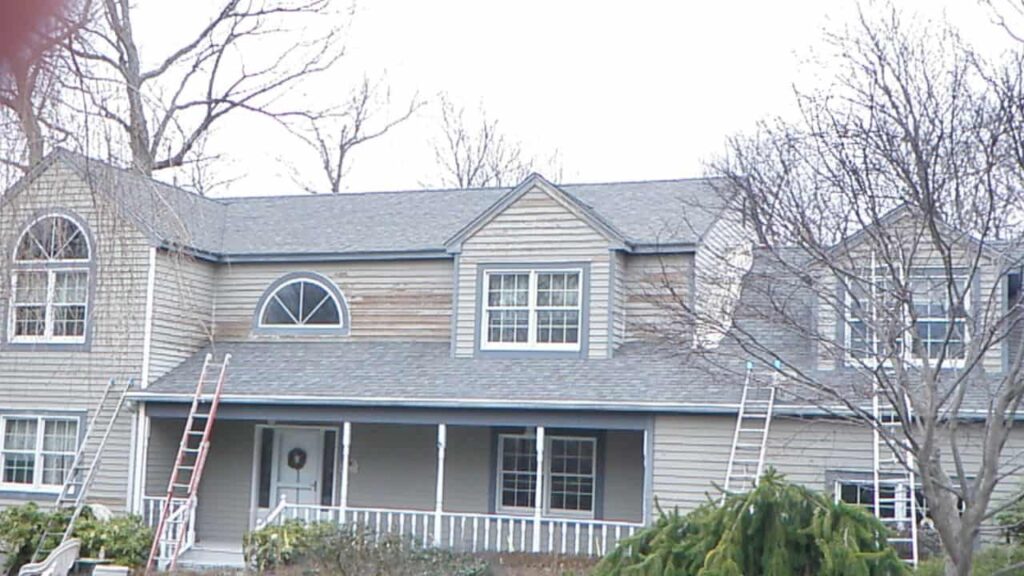
westchester ny house painting prep rotters wood trim & siding
PREP CRAKING AND FLAKING PAINT
Flaking paint occurs when cracked paint begins peeling off its original substrate. In its early stages, the problem appears as hairline cracks in the paint, but will worsen over time if the problem is not fixed, causing larger pieces of coatings to chip off.westchesterpainters.net
Paint cracking on walls, ceilings, and exterior surfaces happens due to a variety of causes, one of the most common being poor preparation of a surface prior to painting. Painting over cracked paint is a bad idea; it is important to remove any flakes from the surface before repainting.
Why Does Paint Crack and Flake?
Poor surface preparation, especially when the paint is applied to bare wood without priming or to previously , coated surfaces that show signs of cracking or flaking paint. using low quality paint. as it may have inadequate adhesion and / or flexibility spreading paint too thin during application
how to fix crackend or flaking prep
- If cracking does not go down to the substrate: Remove the loose or flaking paint with a scraper or wire brush, sand the area to feather the edges, prime any bare spots, and repaint the surface.
- If cracking goes down to the substrate: Remove as much of the existing paint as possible. Methods for removal could include scraping, sanding, using a heat gun, abrasive blasting, etc. Once most of the paint is removed and surface is smooth and even, prime, and repaint with a quality latex paint.
How to Prevent Paint from Cracking
- Take care prepping surfaces before painting: Only apply paint to surfaces that have been properly sanded, cleaned, and primed.
- Never paint over cracked paint.
- Allow paint to dry thoroughly before adding another coat. TESTIMONIALS
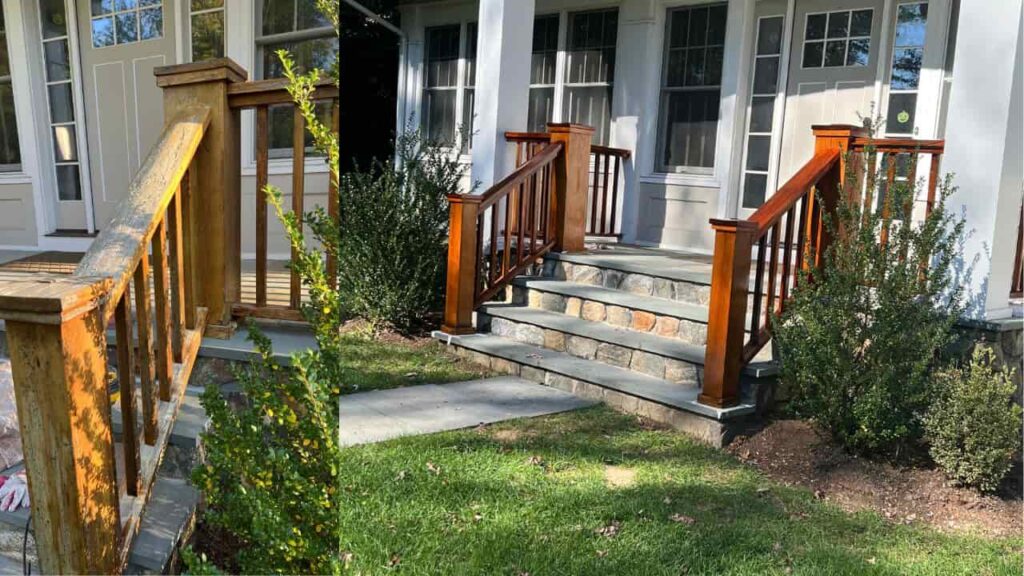
Natural Cedar Restoration (Deck, Siding, Fence)
Here’s a professional, step-by-step process to restore cedar and bring back its natural color while protecting the wood long-term.
1. Inspection & Prep
- Check for rot, loose boards, popped nails, splinters
- Replace damaged cedar before cleaning
- Protect plants, windows, and nearby surfaces
2. Cleaning (Key Step)
Goal: Remove dirt, mildew, old stain, and gray oxidation
Best method
- Use a cedar-safe wood cleaner or stripper (oxygenated or sodium percarbonate)
- Apply with pump sprayer
- Let dwell 10–15 minutes (don’t let it dry)
- Light pressure wash
- 500–800 PSI for siding
- 800–1,000 PSI for decks
- Always follow the wood grain
⚠️ Avoid high pressure — it will fuzz and scar cedar
3. Brightening (Restores Natural Color)
- Apply a wood brightener (oxalic acid)
- Neutralizes the cleaner
- Restores warm cedar tone
- Opens pores for better stain absorption
- Rinse thoroughly
4. Drying Time
- Let cedar dry 48–72 hours
- Moisture content should be below 15%
5. Sanding (If Needed)
- Light sanding for:
- Fuzzy wood
- Raised grain
- Heavy weathering
- Use 80–100 grit (don’t over-sand)
6. Natural Finish Protection
For a true natural look, use:
- Clear or Natural-tone penetrating oil
- Semi-transparent cedar oil
- UV inhibitors are a must
Application
- Brush or stain pad (best control)
- Back-brush for even penetration
- One coat usually enough (follow manufacturer)
7. Maintenance Schedule
- Clean yearly
- Re-oil every 12–24 months
- Avoid film-forming stains (they peel on cedar)
Best Products (Professional Grade)
- Cleaners: Restore-A-Deck, Armstrong-Clark, DEFY
- Brighteners: Oxalic acid-based
- Finishes: Penetrating oil, semi-transparent cedar tone
If you want, I can:
- Write this as a customer-friendly website section
- Turn it into a proposal or estimate description
- Customize it for deck, siding, or fence
- Rewrite it branded for Manuel Z Painting Home Improvement Inc.