Follow Preparation Best Practices
Proper preparation can take a lot of work. And while tackling it all yourself can save on costs, many homeowners don’t have the resources, skill, and time to properly do it all themselves.
It’s just one more reason why you may want to consider hiring a local house painter to get the job done for you.
To ensure the best results possible, be sure to follow the following steps before dipping into your first can of paint.https://manuelzpaintinghomeimprovementinc.com/
- Pressure-wash and clean your walls to remove dirt and dust buildup.
- Repair damaged surfaces.
- Scrape surfaces to remove loose, flaky paint.
- Apply primer and paint to a small area to test for any adhesion or compatibility problems.
- Caulk trim and gaps between materials like siding and brick.
- Add an extra coat of primer to stains.
- Protect your doors, windows, and lights.
- Coat the exterior with primer.
- Fully paint exterior and trim.
Take the Time to Prime
Depending on the type of paint you use, you’ll want to apply one or two coats of primer before applying your paint. You’ll also want to take the substrate into consideration. More porous materials like untreated wood need a thicker layer of primer to ensure the best results.
You may also want to purchase paint that has a built-in primer. This will cut down on your labor but will likely be more expensive per gallon. For primer, wait at least one hour. For flat or matte paint, plan for one to two hours. And for semi-gloss, aim for at least two hours.CONTACT

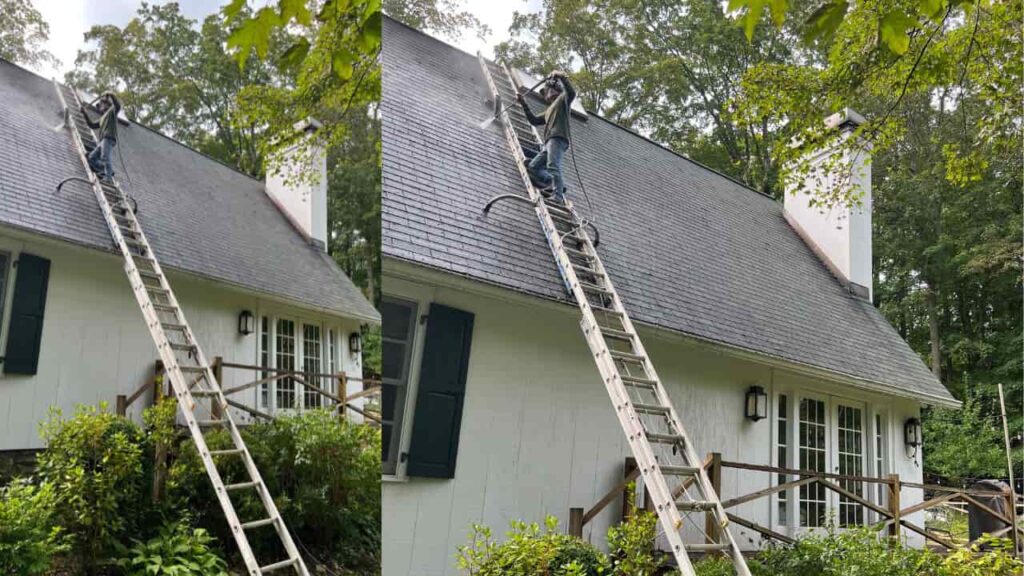
Power washing is a great way to clean moss, mildew, dirt, and grime off surfaces like roofs, siding, decks, porches, and fences. However, using the right technique is crucial to avoid damage. Here’s a step-by-step guide for each area:
🌿 1. Power Washing Moss Off a Roof
⚠️ Important:
- Avoid high pressure on roofs (especially shingles) — it can damage the surface.
- Consider using a roof cleaner or moss killer before washing.
Steps:
- Prep the Area:
- Cover landscaping with tarps or plastic sheeting.
- Make sure gutters and downspouts are clear.
- Apply a Moss Killer (Optional but Recommended):
- Use a pump sprayer to apply a 50/50 solution of water and bleach, or a commercial roof cleaner.
- Let it sit for 15–20 minutes.
- Soft Wash the Roof:
- Use a low-pressure washer tip (like a 40° white nozzle).
- Start from the top and work downward to avoid forcing water under shingles.
- Gently rinse off the moss and cleaner.
- Rinse Thoroughly and allow time for the remaining moss to die off and be washed away by rain.
🏡 2. Power Washing a House (Siding)
Tips:
- Use the correct pressure for your siding:
- Vinyl or wood: 1300–1600 PSI max
- Brick: Up to 2000 PSI
Steps:
- Close Windows and Doors, and cover outlets/lights.
- Apply House Cleaner:
- Use a detergent made for siding.
- Apply from bottom up to avoid streaking.
- Let it Dwell: Wait 5–10 minutes, but don’t let it dry.
- Rinse:
- Use a 25° or 40° tip.
- Spray from top down.
- Keep nozzle at least 12–18 inches from the siding.
🌲 3. Power Washing Deck, Porch, and Fence
Pressure Guidelines:
- Wood Deck/Fence: 500–1200 PSI
- Composite Decking: Follow manufacturer specs — usually low PSI.
Steps:
- Clear and Sweep the area.
- Apply Deck/Fence Cleaner (you can use a bleach mix: 1 part bleach to 3 parts water, or store-bought solution).
- Let Sit for 10–15 minutes.
- Wash with Low Pressure:
- Use a 25° tip.
- Spray with the grain of the wood.
- Maintain a consistent distance (about 12–18 inches).
- Let Dry for 24–48 hours before applying any stain or sealant.
✅ General Tips:
- Use proper nozzles:
- 0° Red: Not recommended – too strong
- 15° Yellow: Good for tough grime
- 25° Green: General cleaning
- 40° White: Soft surfaces
- Test first: Always test in a small, hidden area.
- Wear safety gear: Goggles, gloves, and non-slip shoes.
- Avoid ladders: Use extension wands instead for safety.