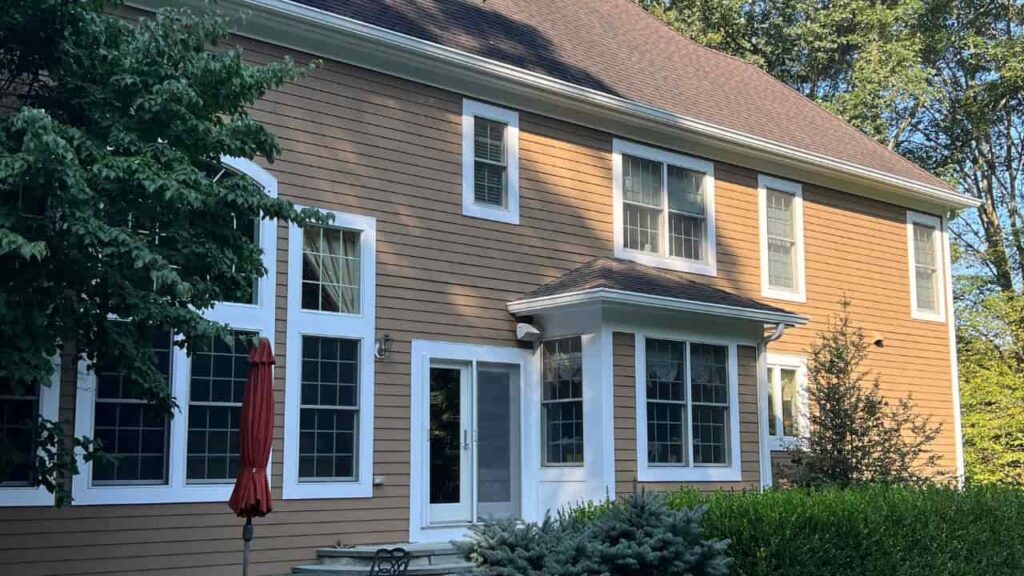
Inviting Home Exterior Color Palettes , From classic to bold, showcase your style with inspiration from these exterior paint color schemes that offer serious curb appeal.
Pale Pink + White + Azure
A blue and white striped awning gives a hint of nautical flair to this charming 1927 Florida home.
Paint colors: Behr Soft Pink + Behr Ultra Pure White + Behr Deep Azure TESTIMONIALS
Olive Green + Oak + White
If you have a Craftsman-style home with intricate architectural details, stick to muted tones to allow your home’s design to shine.
Paint colors: Sherwin-Williams Renwich Olive + Sherwin-Williams Cut the Mustard + Sherwin-Williams High Reflective White westchesterpainters.net
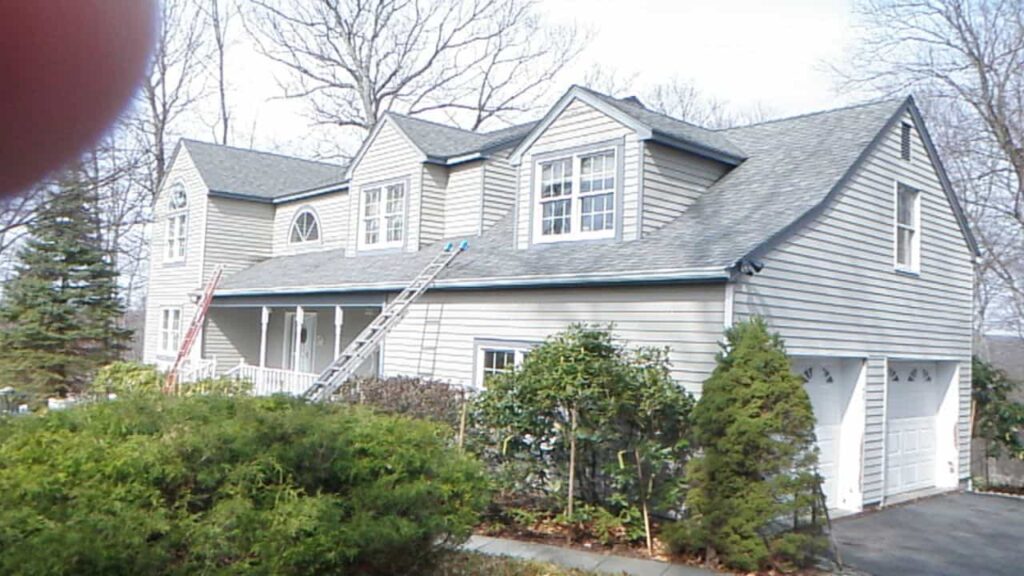
Are you looking for exterior paint vs. stain for your house — how to choose, what’s best for your siding, colors, or how to apply it? Here’s a clear guide to help you decide and get started.
🏡 Exterior Paint vs. Stain — What’s the Difference?
🖌️ Exterior Paint
- Opaque & solid color — hides wood grain.
- Best for: wood, fiber cement (Hardie board), stucco, masonry, metal — basically most exterior surfaces.
- Pros:
- Strong UV protection.
- Wide color choices.
- Great for covering imperfections.
- Cons:
- Peels over time — needs repainting every 7–15 years (depending on climate & prep).
- Requires good surface prep.
🎨 Exterior Stain
- Transparent to semi-transparent — lets grain show.
- Best for: natural wood siding, cedar shakes, log homes, fences, decks.
- Pros:
- Enhances wood grain.
- Penetrates wood — can last long if maintained.
- Fades more naturally than peeling paint.
- Cons:
- Less dramatic color options.
- Doesn’t cover flaws like paint does.
🧰 Choosing the Right Finish
Here’s how to choose based on your home:
| Surface Type | Best Option |
|---|---|
| Wood siding (cedar, pine) | Stain (semi-transparent or solid stain) |
| Fiber-cement board | Paint |
| Stucco | Paint |
| Brick | Paint (or clear masonry stain) |
| Log home | Stain |
Note: “Solid stain” behaves much more like paint — opaque and protective — but with some advantages of stain.
🎨 Color & Style Tips
- Match your home style: Traditional homes often look great in muted, classic colors; modern homes can go bold.
- Consider trim contrast: A lighter trim color against a darker body adds depth.
- Test first: Buy sample cans and paint/stain boards to see color in sun & shade.
🪛 Prep & Application Basics
Good prep = long-lasting finish:
- Clean the surface: Remove dirt, mildew, chalking (pressure-wash or scrub).
- Repair damage: Replace rotten wood, caulk gaps.
- Prime (for paint): Use a quality exterior primer for bare wood/repairs.
- Apply in proper conditions:
- Avoid direct hot sun and temperatures below ~50°F (10°C).
- Follow manufacturer’s dry-time directions.
- Tools: Brushes for edges, rollers for large panels, sprayer for speed (back-roll/scrub to ensure adhesion).
🧴 Maintenance
- Paint: Touch up every few years; expect a full repaint every decade or so depending on sun & weather.
- Stain: Re-apply when wood starts to look dry, faded, or water no longer beads on surface — typically 2–5 years for transparent/semi stains.
🏘️ Quick Recommendations (General)
- Neutral, timeless paint: Soft gray, cream, deep charcoal.
- Semi-transparent stain for wood: Natural cedar tones or subtle tints.
- Solid stain: If you want a painted look with easier maintenance on wood.
If you want more specific recommendations,
- Your siding material (wood, fiber cement, brick, etc.)
- Color preferences
- Climate (sunny, humid, cold)
- Budget/timeframe for the project