
Refinish a Wood Deck & Siding ,See how we cleaned, pressure washed and painted a multi-level deck to give it a fresh look and to maintain it so it will last for years to come.
Controlling the Spray
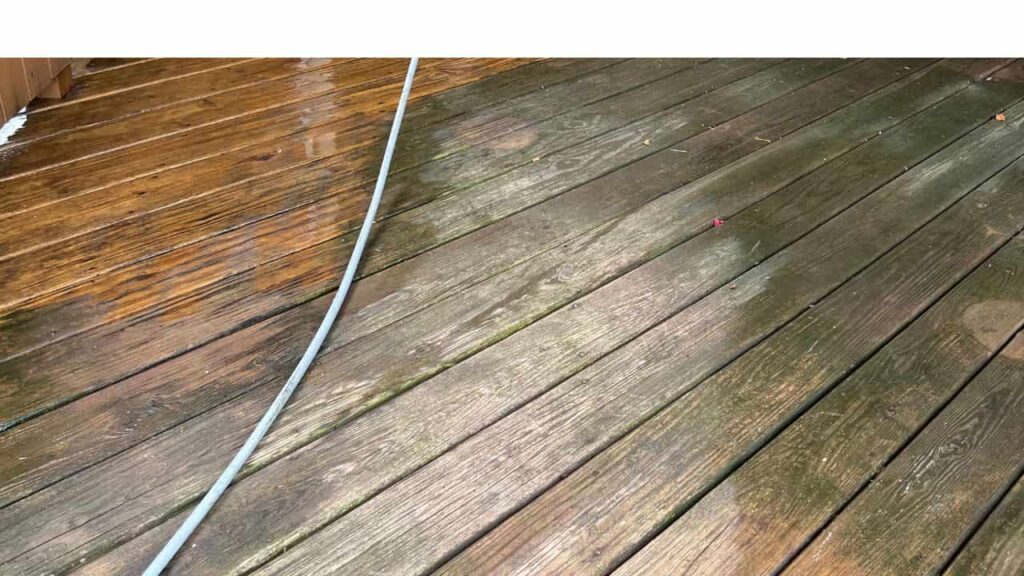
Hold the spray wand at an angle to push dirt and grime away from the contact point. Use consistent motion and distance for uniform cleaning without the risk of pitting or scarring. TESTIMONIALS
If Necessary, Repeat
If it has been a long time since the deck has been pressure washed or has been subject to unusual.
mildew or staining a second application of deck cleaner and another round of pressure washing may needed.
if you were on the fence about applying a new stain on the deck , it may be easier to decide once you ‘ve seen it at its cleanest.
Tap Down Exposed Nails
Wood shrinks over time and nails that were driven flush with the surface of the deck may need.
to be hammered back down level with the wood.
Replacing Planks
Planks that have cracked, split or rotted may need to be removed. Individual planks may be pried up and replaced with new lumber of the same type. Although a structurally sound choice, newer wood will not match older when using a clear sealer or a semi-transparent stain. wetchesterpainters.net

Perfect — using a solid stain on the entire house is a great choice for long-lasting color and protection, especially on wood siding, decks, and fences. Here’s a full step-by-step guide so your job comes out clean, even, and professional-grade 👇
🧰 TOOLS & MATERIALS
- Power washer (1300–2500 PSI)
- Scrub brushes & extension pole
- Exterior cleaner or bleach solution (1 part bleach to 3 parts water)
- Painter’s tape & drop cloths
- Sandpaper or sander (60–80 grit for rough areas)
- Caulk, putty, wood filler (for repairs)
- Solid stain (oil- or acrylic-based)
- Paint sprayer, roller (¾” nap), or brush
🧼 STEP 1: PREP THE SURFACE
- Power Wash Entire House
- Use a 25° or 40° nozzle.
- Start from bottom to top with cleaner, then rinse top to bottom.
- Pressure: 1300–1600 PSI for wood, up to 2000 PSI for harder siding.
- Remove all dirt, mold, and loose paint/stain.
- Let dry at least 48 hours before staining.
- Repair & Sand
- Replace rotted or damaged wood.
- Lightly sand to remove rough spots, splinters, or peeling paint.
- Spot-sand shiny or glossy areas so stain adheres evenly.
- Mask & Protect
- Cover windows, trim, light fixtures, plants, and concrete with plastic or paper.
🎨 STEP 2: APPLY THE SOLID STAIN
- Stir Thoroughly
- Mix the stain well before and during application to keep color consistent.
- Application Tools
- Spray and back-brush for the smoothest, most even finish.
- You can also use a roller and brush if you don’t spray.
- Technique
- Work from top down (gables → walls → trim → bottom).
- Apply with the grain of the wood.
- Maintain a wet edge to avoid lap marks.
- Two coats are recommended for best durability and uniform color.
- Drying Time
- Allow 4–6 hours between coats (check manufacturer’s label).
- Don’t stain in direct sunlight or when rain is expected within 24 hours.
🏠 STEP 3: FINISH TRIM, DECK, PORCH & FENCE
You can use the same solid stain color or coordinate:
- Trim: lighter or darker shade for contrast.
- Deck/Porch: same product, but ensure it’s rated for horizontal surfaces.
- Fence: apply with sprayer or roller, one or two coats depending on coverage.
🌦️ FINAL TIPS
- Ideal temperature: 50°F–85°F (10°C–29°C).
- Humidity under 70% for best drying.
- Clean tools with soap and water (for acrylic stains) or mineral spirits (for oil-based).
- Maintain by washing once a year; recoat every 5–7 years as needed.